Archive

  • Visit JGI.DOE.GOV
Our Science
Home › Science Highlights
Page 1 of 2612345...1020...»Last »

December 21, 2020

An Automated Tool for Assessing Virus Data Quality

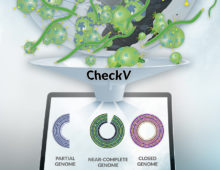
Artistic interpretation of CheckV assessing virus genome sequences from environmental samples. (Rendered by Zosia Rostomian​, Berkeley Lab)The CheckV tool helps researchers to assess the completeness of virus genome sequences and complements a community effort to develop guidelines and best practices for defining virus data quality. [Read More]
November 13, 2020

From Competition to Cooperation

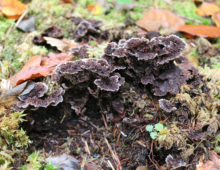
The genome of the common fiber vase or Thelephora terrestris was among those used in the study. (Francis Martin)Comparing 135 fungal genome sequences, researchers looked at how multiple forest fungi have independently evolved to establish symbiotic relationships with plants, and particularly how fungi that feed on decaying plant matter have transitioned to the symbiotic lifestyle. [Read More]

November 11, 2020

A Grass Model to Help Improve Giant Miscanthus

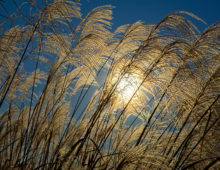
Miscanthus grasses. (Roy Kaltschmidt/Berkeley Lab)The reference genome for Miscanthus sinensis, and the associated genomic tools, allows Miscanthus to both inform and benefit from breeding programs of related candidate bioenergy feedstock crops such as sugarcane and sorghum. [Read More]

September 8, 2020

In Hot Spring Microbial Mat, Viruses Ride “Piggyback”

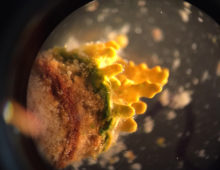
Microbial mat under the microscope. Visible layers contain different microbial communities and minerals. The team characterized viruses in a subset of the mat layers. (John Spear)Scientists have used sequencing methods to comprehensively characterize viral-host interactions in a microbial mat for the first time. [Read More]

August 20, 2020

Effects of Polar Light Cycle on Microbial Food Web

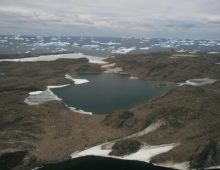
Effects of Polar Light Cycle on Microbial Food WebLight-harvesting bacteria (phototrophs) in Antarctica’s Ace Lake defy the norm when it comes to nutrient cycling in polar regions. [Read More]

July 21, 2020

Computationally Classifying Fungal Lifestyles

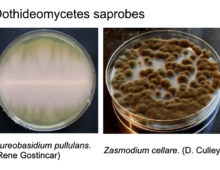
As a proof of concept, researchers developed an algorithm that “taught” a computer how to classify 101 representative genomes of Dothideomycetes, the largest class of fungi, by lifestyles. [Read More]

May 13, 2020

Toward More Efficient Artificial Photosynthesis

A team successfully combined synthetic biology and microfluidics to develop a platform that mimics chloroplast. [Read More]

April 23, 2020

How to Target a Microbial Needle within a Community Haystack

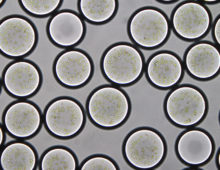
Click on the image or go here to watch the video "Enriching target populations for genomic analyses using HCR-FISH" from the journal Microbiome describing the research.A team developed a pipeline to first target cells from uncultivated microbes, and then retrieve and characterize their genomes. [Read More]

April 17, 2020

The Surprising Structure of a Shrub Willow Sex Chromosome

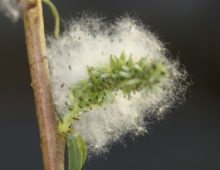
Female S. purpurea flowers. (Larry Smart, Cornell University)Understanding the mechanisms by which potential biofuel feedstocks reproduce can help guide breeding efforts. [Read More]

April 8, 2020

How Filamentous Fungi Sense Food

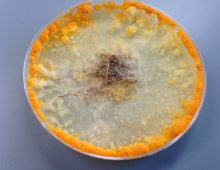
The filamentous fungus Neurospora crassa eating plant biomass. (Vincent Wu)A team led by researchers at the University of California, Berkeley used a multi-omics approach to reconstruct and model gene regulatory pathways used by the filamentous fungus Neurospora crassa, and to identify and decide on the order in which this fungus breaks down plant cell wall materials including lignin, cellulose and hemicellulose. [Read More]
Page 1 of 2612345...1020...»Last »

More from the JGI archives:

  • Software Tools
  • Science Highlights
  • News Releases
  • Blog
  • User Proposals
  • 2018-24 Strategic Plan
  • Progress Reports
  • Historical Primers
  • Legacy Projects
  • Past Events
  • JGI.DOE.GOV
  • Disclaimer
  • Accessibility / Section 508
Lawrence Berkeley National Lab Biosciences Area
A project of the US Department of Energy, Office of Science

JGI is a DOE Office of Science User Facility managed by Lawrence Berkeley National Laboratory

© 1997-2025 The Regents of the University of California