Read our Statement on the Use of Genomics Data.
Statement on the Use of Genomics Data

Building upon the principles for open access in the field of genomics, the JGI recognizes the need to engage the community to inform necessary changes to JGI data policies.
An Automated Tool for Assessing Virus Data Quality
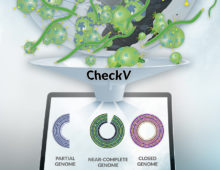
The CheckV tool helps researchers to assess the completeness of virus genome sequences and complements a community effort to develop guidelines and best practices for defining virus data quality.
JGI on the 2020 Highly Cited Researchers List

Congratulations to the dozen JGI scientists recognized by Clarivate Analytics for being on the 2020 Highly Cited Researchers list!
From Competition to Cooperation
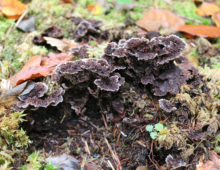
Comparing 135 fungal genome sequences, researchers looked at how multiple forest fungi have independently evolved to establish symbiotic relationships with plants, and particularly how fungi that feed on decaying plant matter have transitioned to the symbiotic lifestyle.
A Grass Model to Help Improve Giant Miscanthus
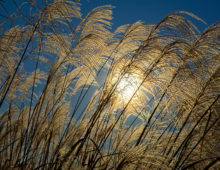
The reference genome for Miscanthus sinensis, and the associated genomic tools, allows Miscanthus to both inform and benefit from breeding programs of related candidate bioenergy feedstock crops such as sugarcane and sorghum.
JGI Welcomes New UEC Members

The JGI User Executive Committee, which represents the JGI user community, welcomes three new members: Kathleen Greenham, Matthias Hess, and Kristen DeAngelis.
The JGI Data Portal: Improving User Experience
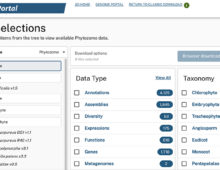
The JGI Data Portal is a pilot download experience currently accessible from JGI’s plant portal Phytozome, and an updated alternative to the Genome Portal.
2021 JGI Proposal Call Brings New Investigators into Community Science Program
For the first time, 63 percent of the 27 accepted annual large-scale CSP proposals come from investigators who have not previously been a principal investigator on an approved JGI proposal.
Secondary Metabolite-Producing Bacteria in Tiny Earth
Tiny Earth plans to sequence hundreds of genomes from antimicrobial-producing soil microbes and subsequently identify novel biosynthetic gene clusters.