Coral reefs are threatened tropical marine ecosystems whose fundamental unit is the reef building coral. A coral colony is a complex community comprised of both the coral host and its associated microbiome, the coral holobiont. The coral microbiome is important in shaping host health but its metabolic contribution to the coral holobiont is poorly understood,…
Genomic diversity of Pseudomonas
Pseudomonas is a large and heterogeneous genus, and these bacteria exhibit varied lifestyles in a wide range of environments, including soil, water, plant surfaces, and animals. Due to their roles in bioremediation, biological control, diseases of plants and animals, and many other environmental processes, the metabolic capacities and ecological functions of these bacteria have been…
Driving the carbon cycle in the dark ocean
The oceans contain the largest reservoir of rapidly exchangeable carbon yet also effectively sequester carbon from the atmosphere for thousands of years. The drivers of this delicate equilibrium are the abundant marine microbial communities ubiquitously present in the Earth’s oceans. This project will provide insight into the major metabolic pathways and key carbon compounds involved…
Insights on uncultured microbes in wastewater
Currently, anaerobic wastewater treatment serves as an essential municipal waste remediation strategy due to its low cost and efficient waste removal, and the production of methane as a sustainable energy source. To effectively enhance process operation for bioenergy recovery, however, researchers need to better understand the microbial ecology of wastewater treatment. Three primary ecological groups–fermenters,…
Exploiting Actinobacteria genomes
Actinobacteria are ubiquitously distributed in both aquatic and terrestrial ecosystems and have developed diverse lifestyles, as well free living as in association with a wide variety of eukaryotes. Next to Proteobacteria and Firmicutes, Actinobacteria constitute the third most populated phylum among the Bacteria. This project calls for sequencing the genomes of 1,000 environmental isolates (type…
How microbes respond to fracking
Unconventional natural gas extraction or fracking can lead to contamination and impact environmental health. Researchers plan to use high-throughput sequencing to reveal the microbial biodegradation pathways and adaptive strategies harnessed by microbial communities in response to potential fracking impacts. Through a controlled comparative genomics study, they hope to gain a clearer understanding of the natural…
Indexed collection of Brachy mutants
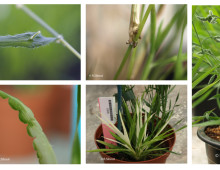
Herbaceous energy crops, especially grasses like switchgrass and Miscanthus, are poised to become a major source of energy in the United States. Because of their efficient water use and productivity, it is anticipated that the majority of the 377 million tons of biomass projected to be produced by energy crops will come from perennial grasses…
Sequencing zoosporic fungi
“Dark matter fungi” describes the large portion of uncultured and unstudied fungal diversity that is ubiquitous and abundant in the environment but absent in taxonomic classifications of the kingdom and sequence databases. Many of these fungi belong to the early diverging branches on the fungal tree of life, and include zoosporic fungi (possessing flagella) that…
Nitrogen-fixing symbioses in pines, poplar and willow
Endophytes–bacteria or fungi that colonize the interior healthy plant tissue–can also fix nitrogen, making them of interest for applications in sustainable agriculture and biofuel production. Previous studies suggest that native Pinus, Populusand Salix species host nitrogen-fixing endophytes above the ground rather than solely in the rhizosphere, and that these symbionts can be used to improve growth…
Microbial mats as ecosystem models
Microbial mats are self-sustaining ecosystems that represent early forms of life on Earth and orchestrate essentially all the major biogeochemical cycles in the space of a few millimeters. The primary goal of this project is to develop highly-resolved, population-specific functional profiles of dynamic microbial mat communities across relevant spatial and temporal scales. Using these data,…